Official
1. Dig
Dig up dirty junk and buried treasure. The official description establishes digging as the first step of the loop.
Cleaning is the step that turns a dirty find into an actual item. Everything you dig up comes out unidentified; only spraying it clean reveals what it is and how rare it is. Here is the full loop, with every claim labeled by source.
These five steps are quoted from the game's own How to Play description — the strongest source there is.
Dig up dirty junk and buried treasure. The official description establishes digging as the first step of the loop.
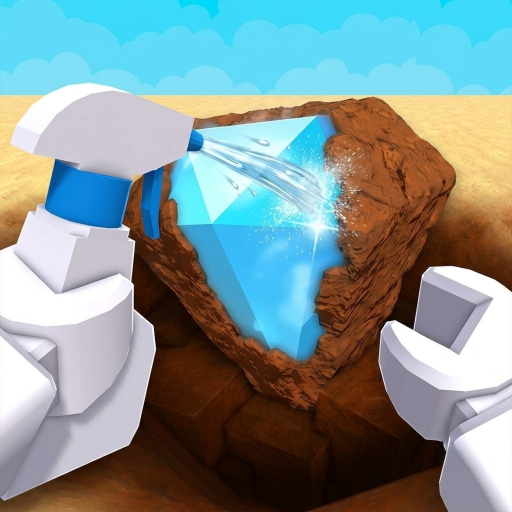
Spray finds clean to reveal what they are. The official description establishes cleaning as the reveal step.
The official description says players hunt for the rarest items in the game. Exact rarity odds and item catalogs are not published.
The official description says players can show off their best finds in their own museum.
The official description confirms better shovels and spray bottles. Individual names, prices, and stats are not verified.
The reveal only happens after cleaning. That is the one rule everything else hangs on.
Use your shovel to pull up dirty junk or buried treasure. Dig Power decides what you can reach.
Spray the find clean. Nothing is identified before this step — rarity only reveals after cleaning.
Find out what it is. Luck appears in source-labeled systems, but exact rarity-roll behavior still needs same-account testing.
Cash the find in for gold (sell function: medium confidence) or place it in your museum (placement is manual: medium confidence) to show it off.
The Instant Clean legacy record is held for manual verification because Phase A did not normalize current per-pass API evidence. Whether it skips, accelerates, or changes every cleaning action needs a live test.
Practical use: treat Instant Clean as a scenario to test against your cleaning bottleneck before changing spray-bottle upgrade priorities.
Rarity only reveals after cleaning. An uncleaned find cannot be sold, displayed in your museum, or even identified — it is pure backlog. The official description makes the reveal the payoff moment: spray it clean and find out what it is.
Since rarity is only visible after the reveal step, every find you leave dirty is a result you never identify.
Multiple gameplay videos show players placing cleaned finds into their museum by hand rather than the game auto-displaying them. Corroborated but not official — treat it as manual until an official source confirms either way.
Dig up a dirty find with your shovel, then use your spray bottle on it. The item is only identified after cleaning — that reveal is when you find out what it is and how rare it is.
By its legacy name, it may affect cleaning time, but Phase A did not normalize current per-pass API evidence or same-account behavior. Treat the exact mechanic as manual-test-required.
Yes. Rarity only reveals after cleaning, so an uncleaned find is worthless — you cannot sell it, display it, or even know what it is until you spray it.
Medium confidence: multiple gameplay videos show players placing finds manually in their museum. Treat it as manual until an official source says otherwise.
Also searched as: Dig and Clean how to clean items, how to clean items in Dig and Clean.